22 Oct 2026
Sapele Plywood: Sustainable Panel Solutions for Modern Interiors
Learn More >


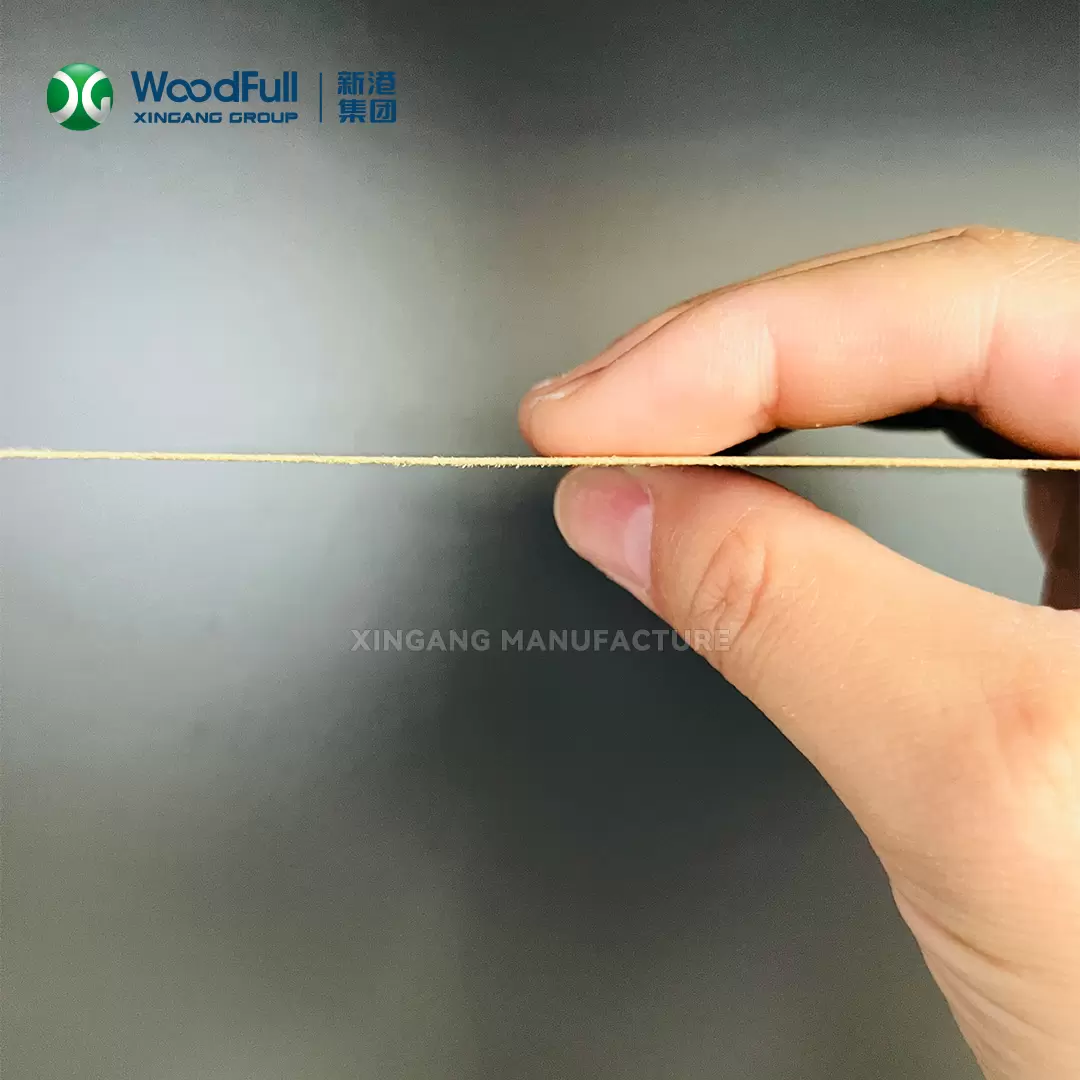
Bendable MDF board is a specialized engineered wood panel designed to create curved surfaces, rounded edges, and complex furniture profiles that are difficult to achieve with conventional flat MDF. By using a controlled fiber structure and a flexible panel construction, bendable MDF can be shaped around curved frameworks to produce consistent architectural and furniture components. It is widely applicable in curved cabinets, reception counters, decorative wall panels, retail displays, and customized interior installations.
For furniture manufacturers and interior fit-out projects, selecting the right bendable MDF board involves more than evaluating flexibility. Panel thickness, bending radius, fiber density, moisture resistance, surface quality, and bonding performance all influence the final result. A suitable specification helps reduce cracking, surface deformation, installation difficulties, and material waste during production.
Medium-density fiberboard (MDF) is manufactured by combining refined wood fibers with adhesives under controlled heat and pressure. Unlike solid wood, which has a natural grain structure that can create directional limitations during bending, MDF has a relatively uniform fiber distribution.
Bendable MDF board is engineered to accommodate curved forming through specialized panel construction. Depending on the manufacturing method, it may use a flexible fiberboard structure, reduced panel thickness, or a specially designed directional configuration that allows bending along a preferred axis.
Two common configurations are longitudinal bendable MDF and transverse bendable MDF. Longitudinal panels are designed to bend along the length of the board, while transverse panels bend across the width. Choosing the correct orientation is essential because bending in the wrong direction can increase resistance and create localized stress.
Panel thickness is another determining factor. Thin flexible MDF panels are generally easier to shape around tighter curves, while thicker panels provide greater rigidity but require larger bending radii or more elaborate forming methods. Common flexible panel thicknesses may include approximately 3 mm, 4 mm, 6 mm, and 9 mm, although availability and bending performance depend on the manufacturer's construction.
For applications requiring a thicker finished structure, multiple thin bendable MDF layers can be laminated together over a curved mold. This approach allows manufacturers to achieve a rigid final component while maintaining accurate curved geometry.
The minimum bending radius is one of the most important technical parameters when selecting bendable MDF board. It describes how tightly a panel can curve without developing cracks, fiber separation, or permanent deformation.
Bending radius is influenced by panel thickness, fiber bonding, moisture content, panel orientation, and the forming process. As a general mechanical principle, thinner panels can accommodate tighter curves because the difference in strain between the inner and outer surfaces is reduced.
However, manufacturers should avoid relying on thickness alone to determine bending capability. Two 6 mm flexible MDF panels from different manufacturers may have significantly different bending performance because of variations in fiber structure and adhesive formulation.
The intended curvature should be communicated through drawings or physical samples. For example, a cylindrical reception counter with a large radius may be achievable using a relatively thick flexible panel, while a decorative column with a tight radius may require thinner material and multiple-layer construction.
During forming, the panel should be supported evenly across its width. Excessive localized pressure can produce surface irregularities or damage the fiber structure. For complex curved furniture components, a dedicated mold or curved supporting framework can improve dimensional consistency.
Surface quality directly affects the final appearance of bendable MDF board, particularly when the material is used in visible furniture and architectural applications.
A uniform surface helps ensure consistent results during painting, veneering, laminating, and decorative finishing. However, bending can introduce small surface irregularities if the panel experiences uneven compression or excessive tensile stress.
For painted furniture, surface preparation should address sanding quality, edge treatment, and primer compatibility. MDF absorbs coatings differently from non-porous materials, so an appropriate sealing and priming process is necessary to achieve an even finish.
Natural wood veneer can also be applied to curved MDF components. The veneer must be sufficiently flexible to follow the panel geometry without cracking or developing wrinkles. Veneer thickness, grain direction, adhesive selection, and pressing conditions should be evaluated together.
For decorative laminate applications, the laminate's flexibility and minimum forming radius must match the MDF structure. A flexible MDF panel does not automatically mean that every surface covering can withstand the same curvature.
MDF performance is influenced by environmental humidity and moisture exposure. Conventional MDF can absorb moisture, causing dimensional changes, swelling, or deterioration in bonding performance. These risks are particularly relevant in kitchens, bathrooms, commercial interiors, and regions with high humidity.
When bendable MDF board is intended for moisture-sensitive environments, moisture-resistant formulations should be evaluated. The board's water absorption, thickness swelling, internal bond strength, and dimensional stability should be considered according to the applicable product standard and intended application.
Indoor air quality is another important specification. Adhesive formulations and formaldehyde emissions can influence the environmental performance of engineered wood panels. Products intended for indoor furniture should have clearly documented emission test results and comply with the regulations applicable to the destination market, such as relevant CARB, EPA TSCA Title VI, or EN 717 requirements where applicable.
Shandong Xingang Group Co., Ltd. focuses on environmentally oriented wood-based materials and has developed its Xingang bionic adhesive technology. According to the company's product information, this adhesive is designed around zero-formaldehyde, zero-benzene, and zero-harmful-substance claims. It has been applied at scale in Xingang decorative boards, ultra-thin density boards, and bionic marine plywood. For specific bendable MDF projects, the actual adhesive system and relevant emissions performance should be confirmed through product-specific technical documentation.
Reliable bendable MDF board production requires consistent control over fiber preparation, adhesive distribution, forming pressure, moisture content, and panel thickness.
Fiber refinement influences the uniformity of the finished board. Inconsistent fiber distribution may create weak areas that become more noticeable during bending. Adhesive distribution must also be controlled to maintain adequate internal bonding without making the panel excessively rigid.
Pressing parameters influence density distribution and dimensional stability. Uneven density can affect bending behavior and create inconsistent resistance across the panel. Thickness tolerance is particularly important for furniture manufacturing because variations can influence mold fitting, lamination thickness, and finished dimensions.
Quality evaluation should include thickness measurement, density consistency, internal bond strength, surface condition, and bending trials. For customized projects, testing should use the actual panel thickness and bending orientation specified in the design.
Different applications require different combinations of flexibility, rigidity, and surface performance.
For curved cabinets and wardrobes, bendable MDF can create rounded door profiles, curved side panels, and decorative furniture details. Surface flatness and compatibility with paint or veneer are particularly important.
For commercial reception counters and retail displays, larger curved surfaces may require multiple-layer lamination over a mold. Dimensional consistency and bonding strength help maintain the intended geometry during installation and long-term use.
For architectural wall cladding and decorative columns, the bending radius, panel width, installation framework, and environmental conditions should be considered together. Panels installed over curved substrates must maintain stable contact without excessive internal stress.
Bendable MDF board provides a practical solution for producing curved furniture and architectural components that would be difficult to manufacture using conventional rigid panels. Its performance depends on panel thickness, bending direction, minimum radius, fiber bonding, surface quality, and environmental stability.
For consistent production results, material selection should be based on the actual curvature, finishing process, and installation conditions. Working with an engineered wood manufacturer that emphasizes material development and quality control helps ensure that flexible panels meet both design requirements and long-term application needs.