03 Jul 2026
Flag Leading, Xingang Strength — Xingang Group Holds CPC 105th Anniversary Celebration & "I Am a Brand Ambassador" Competition
Learn More >


Birch plywood is widely used in furniture manufacturing, cabinetry, interior decoration, shelving, and architectural components because of its consistent structure, attractive surface, and favorable mechanical properties. However, not all birch plywood offers the same performance. Differences in veneer quality, core construction, bonding technology, thickness tolerance, and surface finishing can significantly affect machining accuracy, dimensional stability, and finished-product quality.
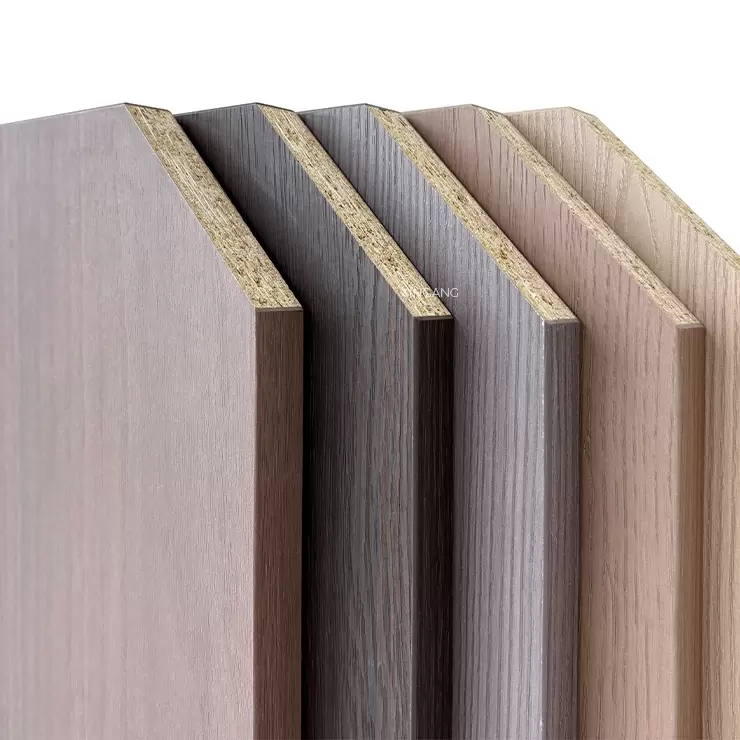
For manufacturers working with birch plywood, selecting the right panel involves more than comparing thickness and price. The material must match the intended application, processing conditions, load requirements, and environmental expectations. A panel suitable for cabinet interiors may not be the best option for exposed furniture surfaces or components requiring repeated machining. Understanding these differences helps reduce material waste, improve production consistency, and control the total cost of finished products.
Birch plywood is manufactured by bonding multiple layers of birch veneer, generally with adjacent layers arranged so that their grain directions cross. This cross-laminated structure helps distribute loads and limits the dimensional movement associated with solid wood. The number of veneer layers, veneer thickness, adhesive system, and pressing conditions all influence the finished panel's performance.
One of the most important factors is veneer quality. Uniform veneer thickness supports consistent panel construction, while defects such as large knots, splits, overlaps, and excessive gaps can affect appearance and structural integrity. The distribution of veneer defects is particularly important in applications involving CNC cutting, edge machining, and visible exposed surfaces.
Core construction also deserves attention. A well-constructed birch plywood panel should have closely bonded veneer layers without significant internal gaps or delamination. Internal voids can become visible after cutting and may reduce screw-holding performance or compromise the quality of machined edges. For furniture components with exposed edges, a consistent core structure is especially valuable because the plywood edge is often part of the finished design.
The appropriate grade depends on the visual and structural requirements of the finished product. Face veneer grades generally describe the appearance of the panel surfaces, including the presence of knots, patches, color variation, and other natural characteristics. Different markets and manufacturers may use different grading systems, so grade descriptions should always be confirmed against the supplier's technical specification and approved samples.
For premium furniture, decorative cabinetry, and visible interior surfaces, a higher face grade can reduce the amount of sanding, filling, and surface preparation required. Where the panel will be covered by laminate, veneer, paint, or another decorative material, the face requirements may be less demanding, provided the substrate is sufficiently flat and stable.
The back veneer and core should not be overlooked. A visually attractive front face cannot compensate for poor internal construction. In laminated furniture panels, for example, weak bonding or uneven thickness may cause problems during pressing and subsequent machining. The most economical grade is therefore the one that meets the complete performance requirements without unnecessary surface specifications.
Panel thickness is a critical parameter in furniture production because it affects component sizing, edge-banding settings, groove dimensions, hardware installation, and assembly accuracy. A nominal thickness of 18 mm, for example, does not guarantee that every panel measures exactly 18 mm. Actual tolerances depend on manufacturing standards, product specifications, and the supplier's process capability.
For CNC furniture production, thickness consistency is particularly important. Variations between panels can require repeated machine adjustments or create differences in finished component dimensions. When panels are used for cabinet doors, drawer components, shelving, or precision-fit assemblies, thickness control should be included in the incoming inspection plan.
Moisture content also influences dimensional stability. Wood-based panels respond to changes in surrounding humidity, and moisture variation can contribute to dimensional movement, warping, or changes in machining behavior. Panels should be stored flat, protected from direct moisture exposure, and acclimatized to the production environment when necessary. Consistent storage conditions help maintain predictable processing results.
Birch plywood is suitable for a range of manufacturing processes, including sawing, drilling, routing, sanding, and CNC machining. Its layered structure provides a useful combination of strength and workability, but machining results still depend on veneer quality, bonding strength, panel density, and cutting parameters.
During CNC routing, internal voids may cause localized edge defects or uneven cutting results. Poorly bonded veneer layers can separate under mechanical stress, especially when the cutting tool is dull or the feed rate is unsuitable. Clean cutting edges are important for components that will receive edge banding or remain exposed.
Screw-holding performance is another practical consideration. Cabinet sides, furniture frames, and shelving systems often rely on mechanical fasteners. The holding capacity depends on panel construction, screw diameter, penetration depth, edge distance, and loading direction. For heavily loaded joints, prototype testing is more reliable than assuming that all birch plywood panels will perform identically.
Adhesive selection affects both panel performance and environmental characteristics. Traditional plywood production may use different adhesive systems depending on the intended application, moisture resistance requirements, and applicable regulations. The adhesive influences bonding strength, resistance to moisture, and formaldehyde emissions.
For indoor furniture and decorative applications, emissions requirements are increasingly important. Specifications such as E1 or other applicable emission classifications may be required depending on the destination market and product category. These classifications should be supported by relevant test reports rather than inferred from a product description.
Shandong Xingang Group Co., Ltd. has developed an environmentally oriented material technology based on Xingang biomimetic adhesive. According to the company's product information, this adhesive is designed without formaldehyde, benzene, or other harmful substances and has been applied at scale in products including biomimetic decorative boards, ultra-thin density boards, and biomimetic marine plywood. When evaluating its application to birch plywood or other panel products, the specific product formulation, bonding performance, and independent test documentation should be confirmed.
A reliable birch plywood supply program should define measurable acceptance criteria before mass production. Visual inspection can identify surface defects, color differences, and obvious edge damage, while dimensional checks verify panel length, width, thickness, and squareness. Depending on the application, additional testing may include moisture content, bonding strength, bending properties, and formaldehyde emissions.
For furniture manufacturers, a trial production run is an effective way to verify how the panels behave under actual factory conditions. The trial should cover cutting, drilling, edge finishing, surface coating, and assembly. This approach can reveal issues that may not be apparent from a small sample inspection.
The best birch plywood is not necessarily the panel with the highest face grade or the lowest purchase price. It is the material that consistently meets the requirements of the finished product and the manufacturing process. Veneer quality, core integrity, bonding performance, thickness tolerance, moisture control, and environmental compliance should all be evaluated together.
With its focus on environmentally oriented wood-based materials, Shandong Xingang Group Co., Ltd. aims to work with global partners to develop healthier and more sustainable material solutions. A systematic approach to material selection and quality verification helps furniture and interior manufacturers achieve more consistent production, reduce processing losses, and improve the reliability of finished products.