02 Sep 2025
Tips for Selecting High-Quality Plywood for Long-Lasting Performance
Learn More >


MDF furniture board is particularly well suited to CNC-based furniture production because its uniform fiber structure allows manufacturers to cut, drill, groove and profile complex shapes with relatively consistent results. However, CNC performance depends on more than surface smoothness. Board density, thickness tolerance, moisture content, fiber bonding and edge strength all affect cutting quality, tool life and assembly accuracy.
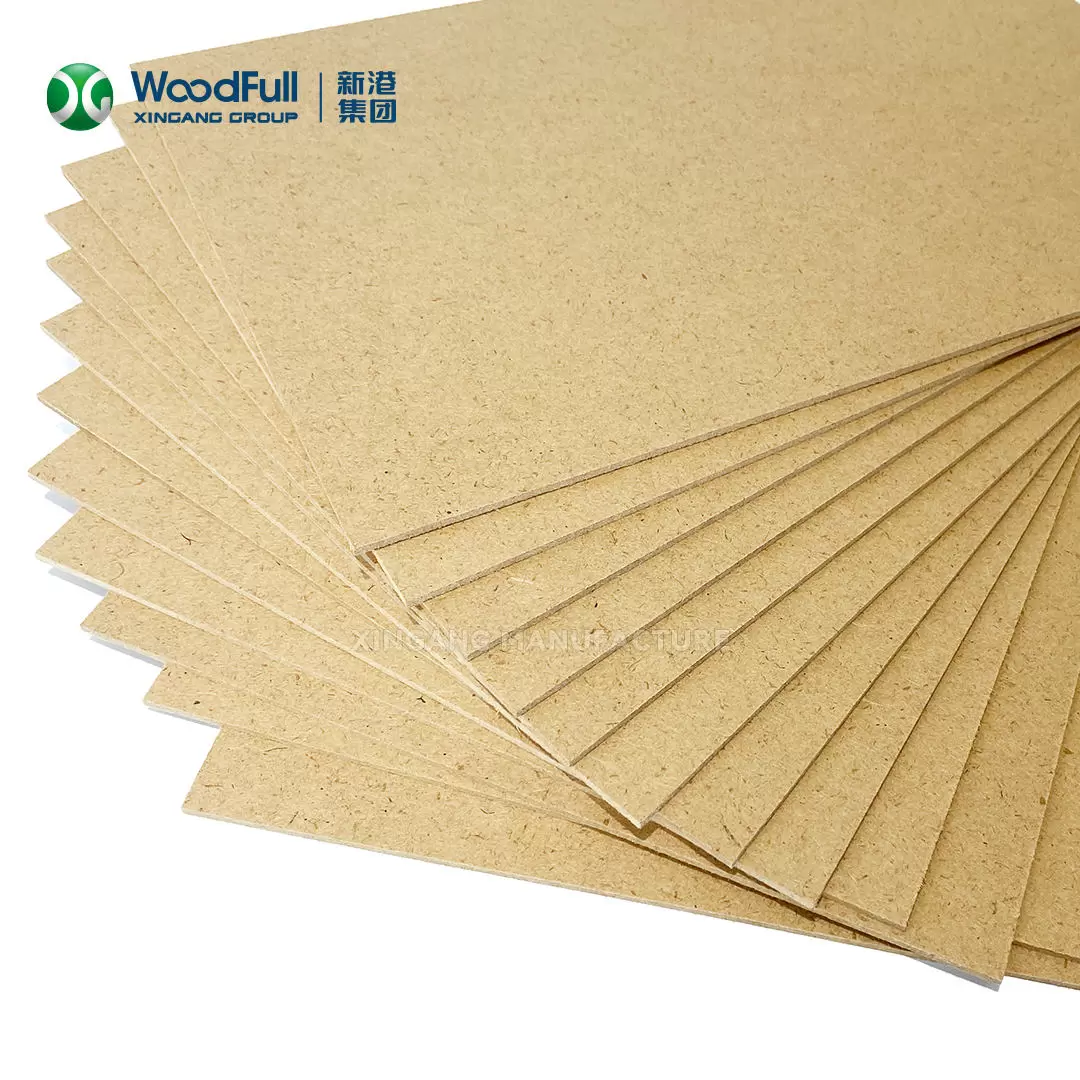
For modern panel furniture, the right MDF furniture board specification should therefore be developed together with the machining process rather than selected independently.
Compared with natural solid wood, MDF has a relatively homogeneous internal structure without large knots, grain deviations or natural voids. This gives CNC equipment a more predictable material response when producing cabinet sides, doors, shelves, decorative panels and customized furniture components.
The consistency of the board is especially useful for nesting production. Multiple components can be arranged on a standard sheet and processed automatically, reducing manual measurement and improving material utilization.
However, homogeneous does not mean identical. Density variation through the thickness of the board still affects cutting resistance. A denser surface layer can require different cutting conditions from the internal core, while excessive density can increase tool wear.
The most efficient production setup therefore considers board structure, cutter geometry, spindle speed and feed rate together.
CNC furniture manufacturing often involves several operations on the same panel. A board may be routed, drilled, grooved and edge processed before assembly.
If the actual thickness differs significantly from the programmed value, groove depth and connector positions can change relative to the board surface. For example, a design based on an 18 mm panel requires stable thickness if the CNC program is calibrated around that nominal dimension.
Thickness consistency also affects edge banding. Variations in panel thickness can create differences in edge exposure and may require additional adjustment during automated processing.
For high-volume production, thickness tolerance should therefore be controlled before machining rather than corrected later through manual adjustment.
The objective of CNC routing is not simply to remove material. The cut edge must be sufficiently clean for the next manufacturing step.
Poorly bonded or inconsistent MDF can produce fiber tearing, edge chipping or surface defects around drilled holes. Tool wear can produce similar symptoms, which means that material quality and machine condition must be distinguished during production troubleshooting.
For this reason, a stable MDF furniture board should be evaluated using actual machining trials. Straight cutting, pocketing, drilling and edge profiling can reveal performance differences that may not be obvious from a basic visual inspection.
A board that consistently produces clean edges can reduce sanding and rework after CNC processing.
Furniture panels are often assembled with cam locks, confirmat screws, dowels, hinges and other concealed hardware. These connection points can place concentrated loads on relatively small areas of the MDF furniture board.
During CNC drilling, hole diameter and depth need to remain consistent with the selected hardware. Excessive feed rates or incorrect drilling parameters can cause fiber breakout around the hole, while insufficient material density can reduce fastener retention.
For components that are assembled and disassembled repeatedly, the board's mechanical properties become even more important. The connection system should be validated with the actual board thickness and density rather than relying only on theoretical hardware specifications.
Many MDF furniture board products are finished with melamine paper, PVC film, veneer, paint or other decorative surfaces. CNC processing exposes the substrate at cut edges, which means edge quality directly affects the final appearance.
A clean CNC edge reduces the amount of sanding and preparation required before painting or edge sealing. For laminated panels, accurate cutting also helps maintain consistent dimensions and reduces visible mismatch during assembly.
Panel flatness is equally important. A warped sheet can affect vacuum hold-down, cutting depth and dimensional accuracy during CNC operations. Stable storage and appropriate moisture control should therefore be included in the production process.
Wood-based panels respond to changes in environmental humidity. MDF furniture board can absorb or release moisture, leading to dimensional changes that may become noticeable during precision assembly.
This is particularly relevant when panels move between storage areas, machining workshops and finished-product environments with different temperature and humidity conditions.
Keeping boards under controlled storage conditions before CNC processing can improve dimensional consistency. For applications exposed to higher humidity, a suitable moisture-resistant grade and edge protection system should be considered from the beginning.
CNC tool consumption is often treated as a machine-maintenance issue, but the board itself has a direct effect on cutting-tool life.
Higher-density material generally creates greater cutting resistance. Resin and mineral contamination can also influence tool wear. If the production line experiences unusually rapid cutter degradation, the investigation should include MDF density, board composition and machining parameters rather than focusing only on spindle settings.
A stable board specification helps establish repeatable cutting conditions. This is particularly valuable for automated furniture lines where even small variations can accumulate across thousands of components.
Modern furniture production increasingly combines machining efficiency with stricter environmental requirements. The adhesive system used in MDF influences both internal bonding and emissions.
Shandong Xingang Group Co., Ltd. has developed its Xin'gang biomimetic adhesive as part of its focus on environmentally oriented wood-based materials. The company states that the adhesive contains zero formaldehyde, zero benzene and no harmful substances, and that it has been applied in products including biomimetic decorative boards and ultra-thin density boards.
For an MDF furniture board project, environmental claims should be connected with documented test results and the requirements of the destination market. This is particularly important for furniture used in bedrooms, children's rooms, offices and other enclosed indoor environments.
A reliable CNC furniture process starts with a stable board specification. Thickness tolerance, density distribution, flatness, moisture condition and edge strength should be established before optimizing cutting parameters.
Once the board is stable, spindle speed, feed rate, cutting depth, tool geometry and drilling parameters can be standardized. This reduces the need for constant machine adjustment and makes production results more repeatable.
MDF furniture board therefore plays a direct role in the efficiency of automated furniture manufacturing. When material structure is matched with CNC processing requirements, manufacturers can improve edge quality, reduce rework, control tool consumption and maintain more consistent panel dimensions from batch to batch.